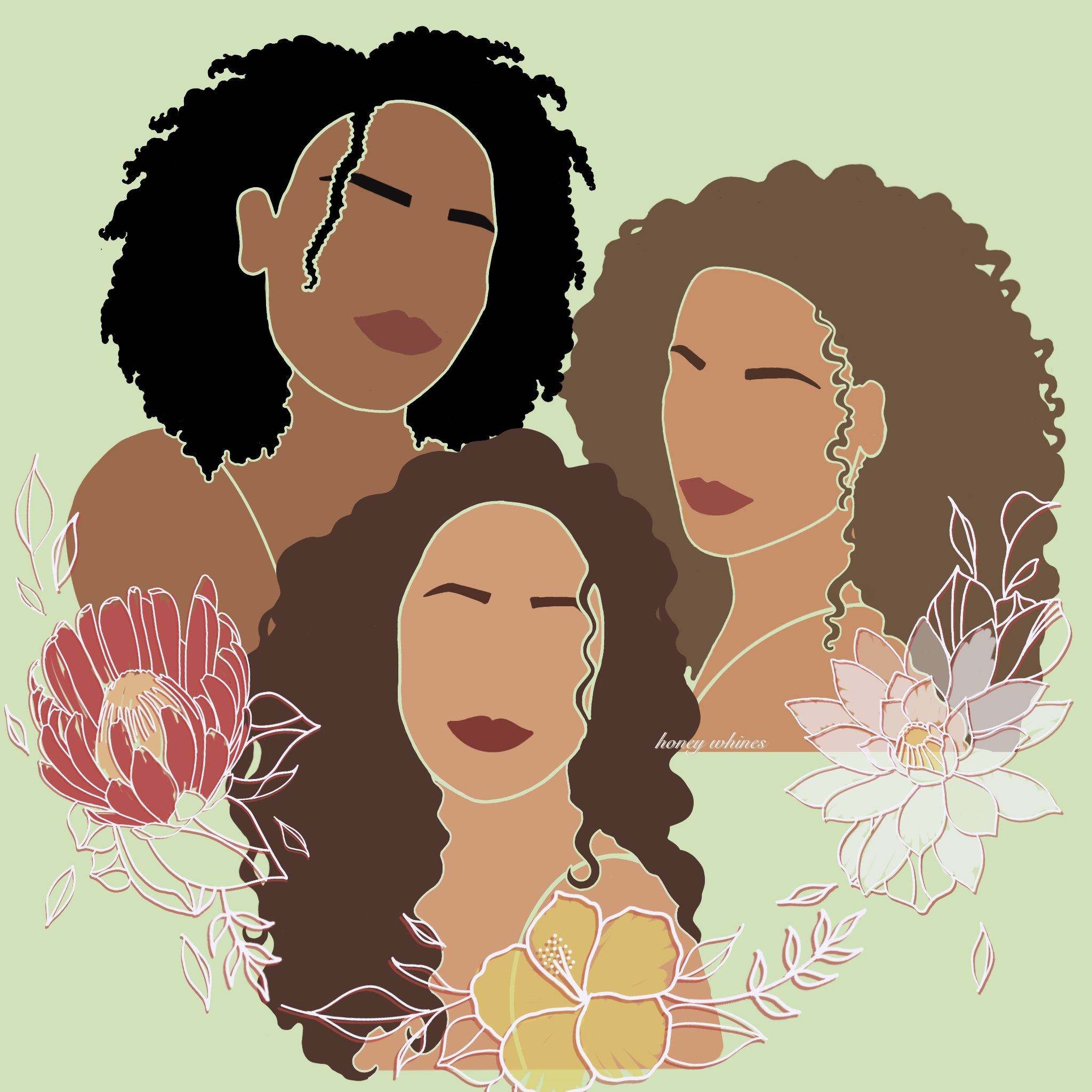
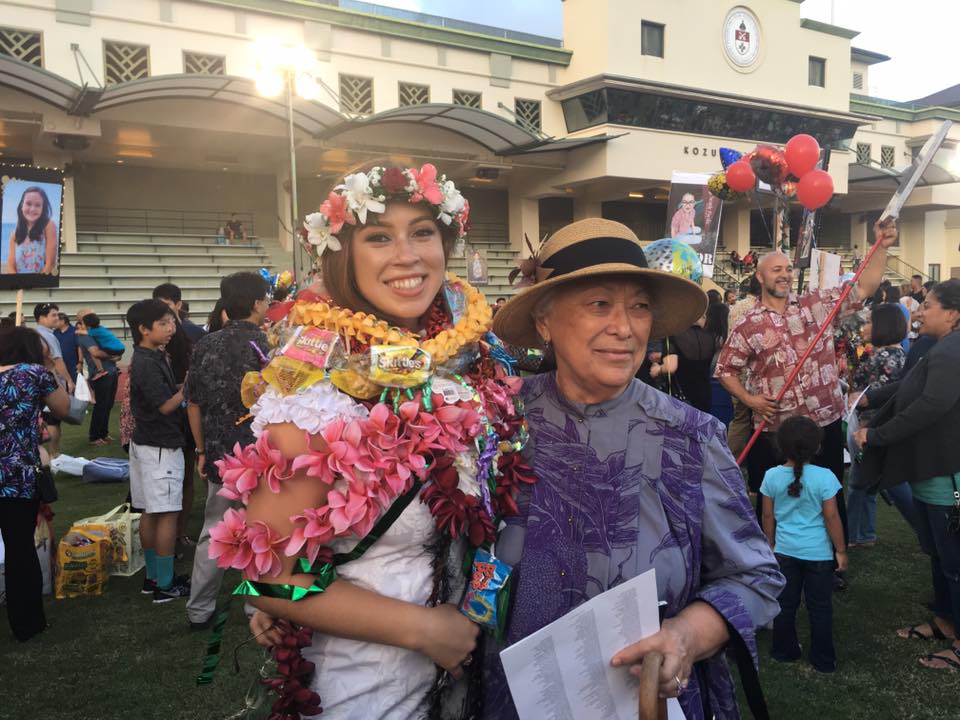
A discussion on Hawaiian culture and embracing the gap between how the world sees us and how we see ourselves.
By Ana Thomas
PART ONE
My grandma is one of the most talented, intelligent, and beautiful people that I know. She sings, draws, plays ukulele, and has a green thumb that will be passed down for generations. Each time I visit home, I dedicate entire days to talking story with my grandma. Out of all her talents, her memory is the one I am most impressed with. She has decided to share a few of her own memories to help me depict the cultural roots and background that has set the foundation for my own experiences and perspective on the course of multiculturalism.
Grandma Sylvia was born in 1938, 21 years before Hawai’i became an official state of the United States. She was born to her Korean mother and her father who was mixed with Hawaiian and Caucasian blood. As a child, the differences between her appearance and that of her family members seemed to jump out of each mirror she stood across from. For most of her life, she strongly identified with her native Hawaiian heritage. Yet, upon reflection, she has realized how proud she is of her multiple cultures and rich genealogy. There are two women to whom she attributes her deep gratitude for her Hawaiian and Korean roots; Sarah Eliza ‘Grams’, and her Aunty Theresa who was born in Korea before moving to O’ahu as a little girl.
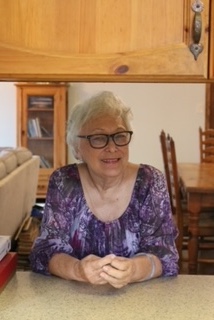
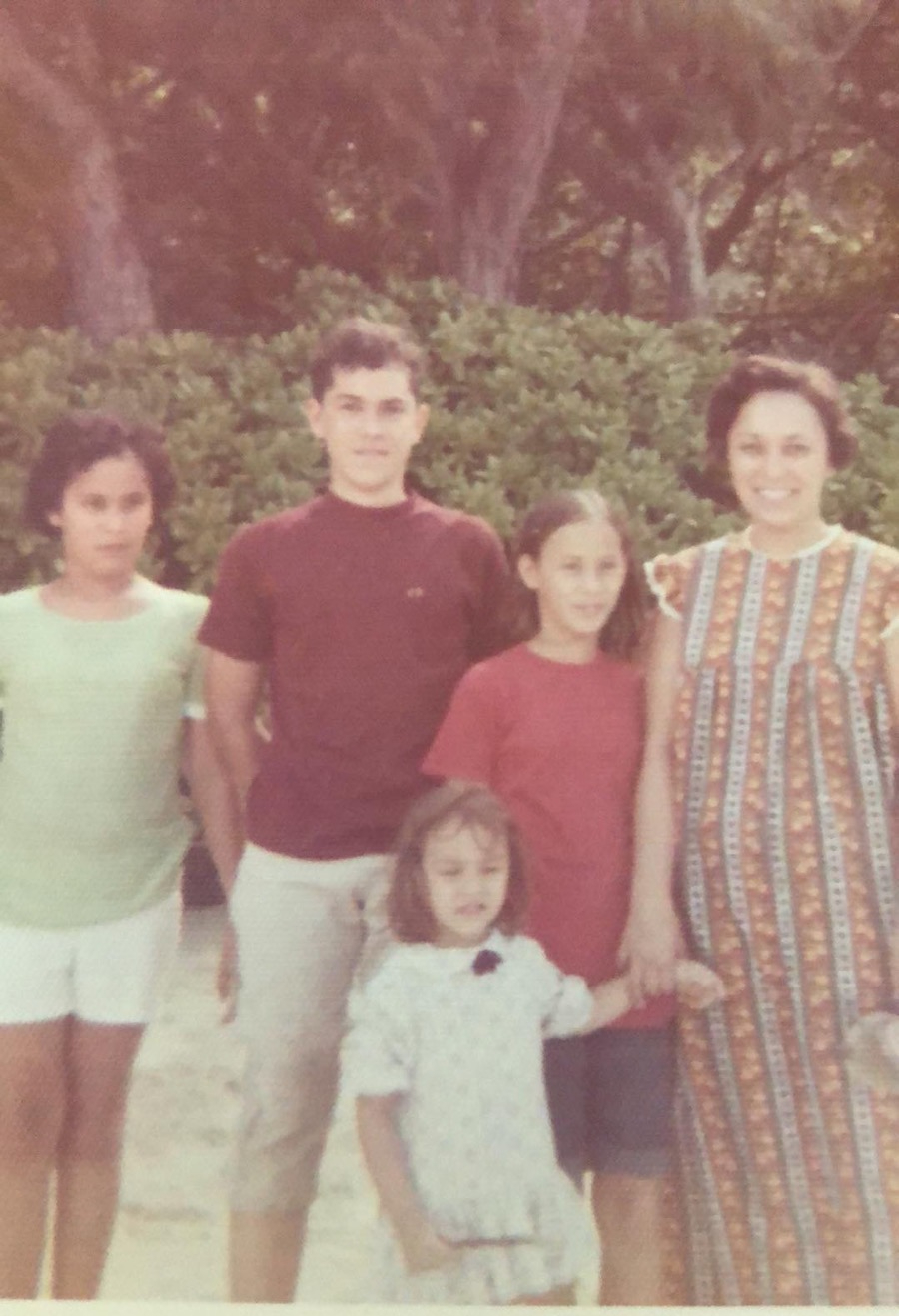
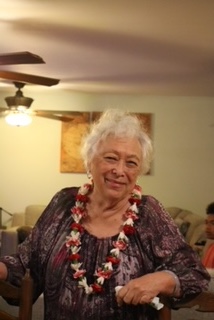
Sometimes I have to remind myself that this smiling woman wasn’t always my multi-talented grandma. She was once an inquisitive and smart young girl who wrestled with identity, culture, and image on her own. With the help of her elders, Grams and Aunty Theresa, young Sylvia developed pride in who she was and where she comes from.
“While my grandma made me so happy to be Hawaiian, she also taught us about our ancestors who arrived on the Mayflower. Grams was Hawaiian, but she also had blue eyes and I remember her to be so gentle. She truly embodied being Hawaiian. She taught us kids to respect the ocean and to never turn our back on it. She taught us to watch the currents and how to pick just the right amount of limu and how to clean it. You have to leave some so that it can continue to grow, even if it was so yummy to eat. She also taught me of Hawaiian herbs like popolo, laukahi, and ‘ilima. She schooled me in the different winds, the trades of the Kona and the names of the ahupua’a. I knew where Waikane* started and where Waiahole** ended. Our poi would come in a cloth bag, and we would have to strain it and mix it—every Hawaiian house had a poi strainer. She taught me to appreciate the sweet smells of Hawaiian gardens. She also read me letters from our cousins in Massachusetts, who lived a drastically different life from our own yet remained connected through writing.
My Aunty Teresa was born in Korea and came to the US as a young girl. She showed me my grandpa’s old rice bowls and just made Korea seem so picturesque as she talked of the scenery and her childhood memories. I really learned to appreciate my Korean heritage through her.”
Telling stories gives us an identity that never makes use feel excluded. Knowing relationships and genealogy connects you to people and places that we can see now. And it feels good. I look beyond the telephone poles and wires and buildings and I see the ocean. I think about how my ancestors learned to surf in the Kailua ocean and how I still live here now. I think thats special.
Grandma Sylvia
How we see ourselves, and how the world sees us is not always one in the same. While this gap can expose us to dangerous situations, its usually inevitable and shouldn’t be a gap that we feel obligated to close. Instead, we should continue to embrace ourselves, remain aware of how the world perceives us and acknowledge the healthy differences between the two. This is how we connect with others in the most authentic way. I shared with my grandma that for most of my life, I wrestled with how the world perceived me and what –using her words – I intrinsically feel about who I am. Once I refused to allow worldly perceptions of me to limit who I surrounded myself with and determine how I spoke and behaved, I learned how to channel my various cultures to create meaningful connections with a spectrum of different people. This is how I took control of my unique circumstance of racial ambiguity and used it to fulfill a passion of mine: PEOPLE. This meant that my language, accent, jokes, music and more would subconsciously differ based on the group of friends I was with. Code-switching is a common method of survival when we find ourselves beyond the realm of comfortability and protection. Recognizing the difference between survival and the opportunity to blend our cultures is another key that allows me to embrace all parts of my soul in the way I feel is most appropriate. It’s how I choose to learn from people. This means that I could jam to Bob Marley with some of my friends and sing my heart out to Beyonce or Alicia Keys with others. It has also taught me that there is more than one way to go about life. The ability to connect through diversity combined with a decent sense of humor is what enabled my openness to country music for the first time at twenty years old.
In 1958, my Grandpa and Grandma married each other. My Grandpa was majority Hawaiian, with a mix of Chinese and Caucasian descent. His family referred to my grandma as “the Korean girl”. Quite the distinction for a girl who did not see herself in the faces of her Korean cousins. This romantic connection became the perfect opportunity for my grandma to share her Korean traditions and dishes while also embracing her Hawaiian pride. This is the harmony that I believe represents the epitome of our culture in the islands of Hawai’i. We know how to adopt and share cultures with respect and humility. My grandma and I have bonded over our appreciation and celebration of what makes us unique: our genealogy, our physical features, and our stories.
My grandma has taught me so much, so I admire how she is so willing to keep learning at this stage in her life, even if it’s from her granddaughter. While she is a novelty when it comes to our history and culture, the life I have built beyond the islands is vastly different from much of what my grandma has personally experienced. When I first came home from college nearly six years ago, I’ll always remember this question that I never expected to receive from her. She said, “Ana, is the racism in the mainland really as bad as they say on the news?” What a beautifully heartbreaking question filled with innocence, juxtaposed against a world that rips this same innocence from children and families across the country. Hawai’i is unique in where we don’t see the battle between Black and White excellence, power, and privilege to live in our everyday lives. I am not saying it does not exist; however, it is not a leading dilemma in our cultural and social realm. We are more likely to see police brutality through Twitter and not on Kamehameha HWY.
We had a more recent discussion where Grandma shared how White people are increasingly becoming a minority, and the population of multicultural people is growing. After a jarring moment of realization, I responded with, “Yes Grandma, this may be true. But let’s acknowledge who holds a majority of the power to make decisions.” This article is not meant to take a deep dive on politics and power struggles, I think that deserves its own space. However, the discussion of power is relevant to depicting the unique cultural setting that Grandma has been raised in. I mentioned earlier that my Grandma was born in a territory of the U.S., a place that had its Hawaiian monarchy, language and generations of culture destroyed by the U.S. ‘Ōlelo Hawai’i was functionally banned in 1896*** when schools could only use English. America has dominated and colonized Hawai’i since. Yet, during my childhood, I didn’t see White people as the dominant culture or power figure in the islands, in fact, it appeared to be the opposite.
I recall my childhood being filled with Korean BBQ, authentic Chinese takeout (and Panda Express), lumpia stands, and malasadas. We learned Japanese and Hawaiian language in our public school system. In elementary school, we learned about the Chinese New Year by making our own paper dragons that decorated our refrigerators at home. On the respective Girls’ Day and Boys’ Day in elementary school, the boys and girls would end the day by putting the celebrated genders’ chairs up for them. These celebratory days derive from Japan. My family always had our own lu’au for Christmas and my grandma, mom, aunties, sisters, cousins and I would pack the meat and fold the pi for the man doo on New Year’s. The prettier your man doo, the prettier your children would be (according to Korean mystic belief)!
Not too long ago, my Grandma graduated from Kamehameha Schools. My mom, sister and aunty are also proud graduates of the Hawaiian private school. Kamehameha Schools proudly remains a strong institutional pillar for Hawaiians. Grandma shared that during her time there, Kamehameha was a military school. Maybe I truly was meant to attend West Point over 60 years later. Grandma and I laughed over her knowledge on marching as she cracked a joke on the 180-degree facing movement, ‘about face.’
“I bet you didn’t think I knew what that was, did you?”
GRANDMA said with a hearty laugh. No… no I didn’t.
A recent birthday phone call to my grandma turned into a deep bonding moment as I shared with her my life in the military, living in the mainland and away from my family. As I navigate my place in the world, I’ve begun to realize that I don’t need to find it, I need to create it. I shared this revelation with my Grandma, and she began to reflect back on how she embraced different parts of herself throughout the course of her life. Together, we realized that everything she decided to learn and become has shaped the lives of her children, grandchildren, and great-grandchildren as we continue to gather and celebrate holidays, birthdays and graduations filled with tradition and ono dishes. She is the matriarch of a beautiful, blended family and she expressed the pride and fulfillment it brings her. Grandma Sylvia is relentless in her will to keep our family history alive and I am committed to matching that energy.
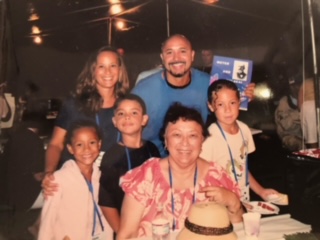
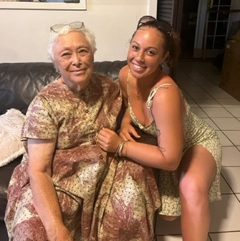
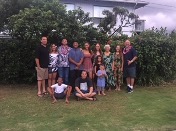
Blending the discussion of my experiences with my grandmother’s was done with much intention and care. Keep in mind that we were raised in two different time periods on the same island. Yet, there is an important similarity that my grandma and I share: we developed our own personal narratives on what it meant to us to navigate our multiple heritages. Our family members share our blood, but the broad spectrum of skin tones, features and hair textures have led us to be perceived differently by the world, thus leading us to have our own experiences and narratives. Now it’s time to talk about it. Now it’s time to embrace multiculturalism.
Thank you for reading! Grandma and I aren’t pau yet, so keep an eye out for PART TWO — “Pearl Harbor: I Never Talked About It… Until Now”
References
RELATING TO HAWAIIAN LANGUAGE Ke Kōmike ʻAha Kenekoa o ka Hoʻokolokolo
http://www.hawaii.edu/reefalgae/publications/ediblelimu/
http://data.bishopmuseum.org/ethnobotanydb/ethnobotany.php?b=d&ID=popolo
https://sites.google.com/chaminade.edu/campusplants/laukahi


 THE HONEY WHINES